Engineered Hardwood in Bluffton, SC
Most newer Lowcountry homes sit on concrete slabs, and slabs are where solid hardwood goes to cup, gap, and complain. Engineered hardwood exists for exactly this ground: a real layer of oak or hickory on top, bonded to a plywood core that barely moves when the humidity swings from a February dry spell to August soup.
Engineered installs at $7 to $13 a square foot for standard material and $12 to $20 for premium wide-plank — a typical 500-square-foot floor runs about $3,500 to $6,500. It can float over a moisture barrier, nail down over wood subfloors, or glue down directly to the slab, which makes it the honest answer for slab homes, ground-floor condos, and anywhere solid wood should not go.
The wear layer is the whole decision, and it is the thing the box stores print smallest. A wear layer around 4 millimeters can be sanded and refinished once or twice over the floor's life — it behaves like solid wood because on top, it is. A wear layer under 2 millimeters cannot be refinished at all; when the finish wears, the floor is done. We measure and tell you which one you are looking at before you buy anything.
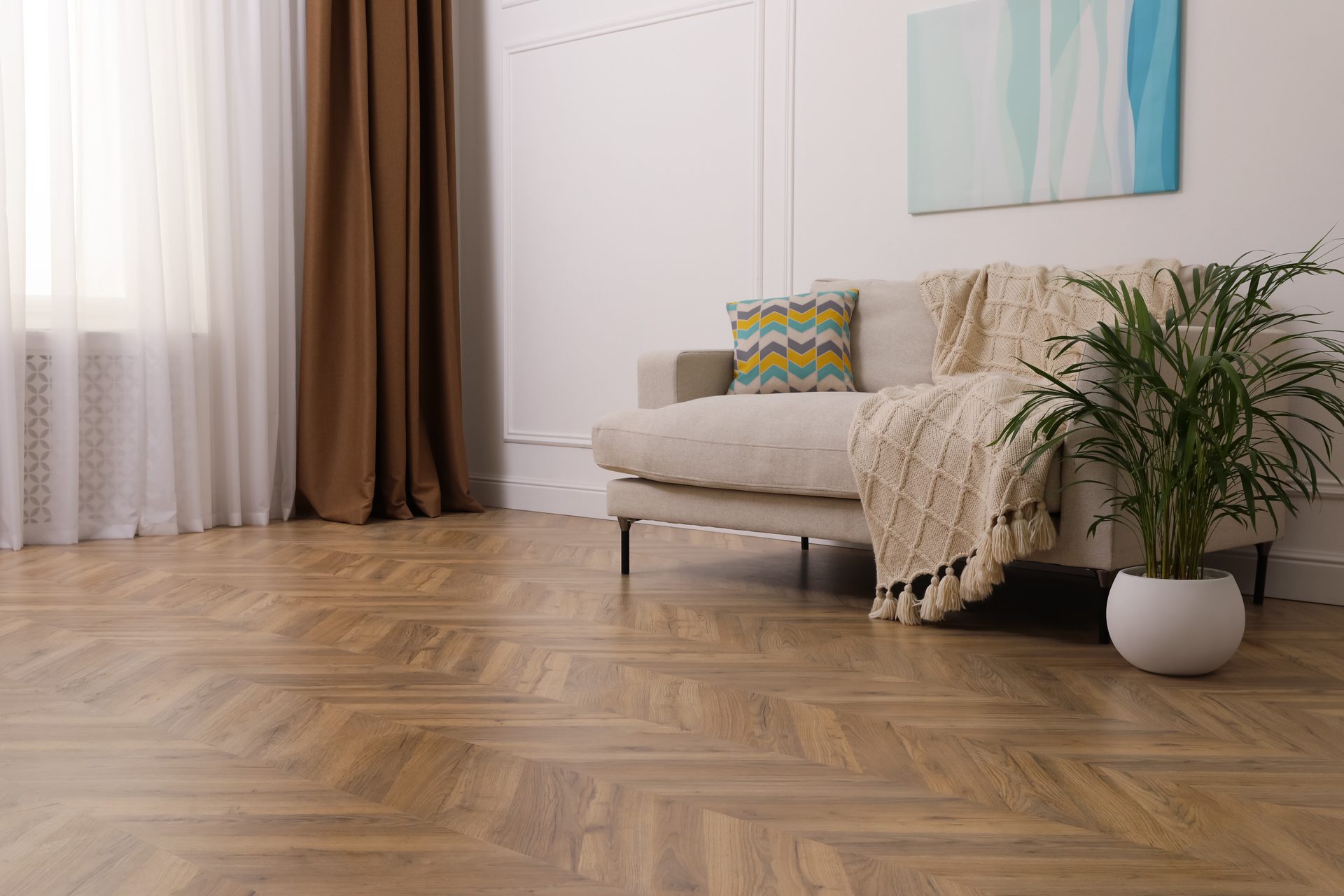
Because the surface is real wood, engineered takes the same stains, finishes, and patterns as solid — including the herringbone that makes a Bluffton entryway. It also walks quieter over a slab and feels warmer than the tile it usually replaces.
Every engineered estimate from us names the wear-layer thickness in writing. If a floor cannot be refinished, you will know it before it goes down, not in fifteen years when it matters.
Where Engineered Belongs
Over concrete slabs, first and always. In ground-floor rooms where humidity rides up from the ground. In condos with concrete between floors. And in any room where a wide plank is the look you want — wide solid planks move more with the seasons than narrow ones, and the engineered core keeps wide boards calm.
Where it does not belong: under a leaking appliance nobody has fixed yet, or over a subfloor with an active moisture problem. Water is every floor's enemy; the measure visit checks moisture before we argue about color.
Glue-Down, Nail, or Float
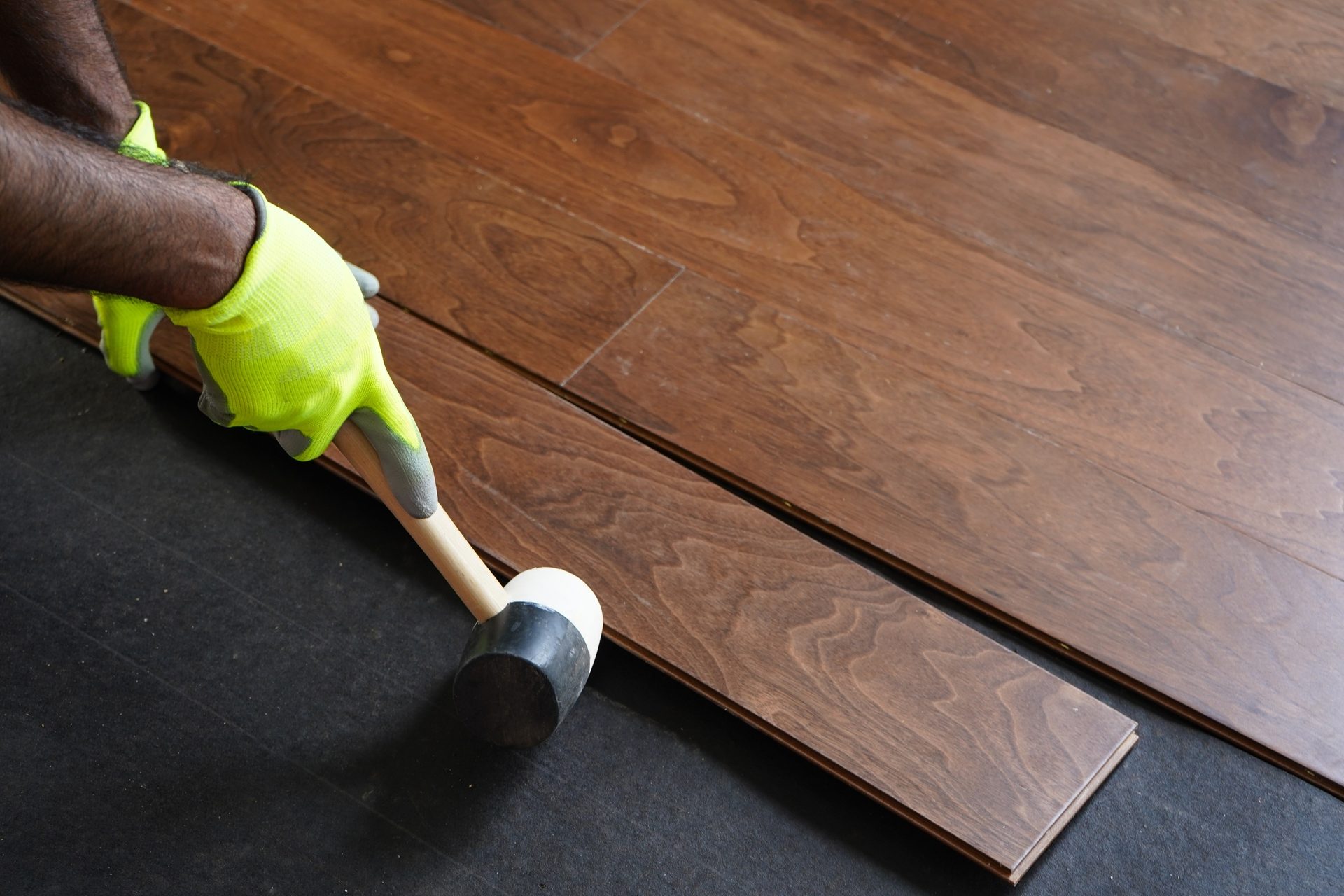
Glue-down is the slab standard: the floor is bonded to the concrete over a moisture barrier, feels the most solid underfoot, and is the quietest of the three. Float installs ride on an underlayment and can be the right call over existing tile or in a condo with sound rules. Nail-down works over wood subfloors and prices like a solid install.
The written estimate names the method and why. If two methods would both work in your house, you will see both prices and pick with your eyes open.
How much does engineered hardwood cost in Bluffton?
Standard engineered runs $7–$13 a square foot installed; premium wide-plank runs $12–$20. A 500-square-foot floor runs about $3,500–$6,500. Glue-down over a slab figures about 20% over the float/nail base for the adhesive and moisture system.
Is engineered hardwood real wood?
The part you walk on, look at, and refinish is real hardwood — the same oak or hickory as a solid board. Underneath it is a plywood core engineered to stay flat. The honest question to ask any seller is the wear-layer thickness; ours is in the written estimate.
Can engineered floors be refinished?
Floors with a wear layer around 4mm or thicker, yes — usually once or twice in their life. Thin wear layers (under about 2mm) cannot be sanded; when their finish wears through, replacement is the only fix. That is why the thickness goes in writing before your floor goes down.
Engineered or solid — which should I choose?
Over a wood subfloor in a conditioned house, both work and it is a taste-and-budget call. Over a concrete slab or anywhere humidity swings hard, engineered is the correct floor and we will say so even though solid costs more. The measure visit settles it with moisture readings, not opinions.
Ready to price your floor? The measure visit is free — and the price comes in writing.